Wireless Temperature and Humidity Sensor DVTs-304-LoRa
$ 78.82
Category:
Extra Features
Premium Quality
Secure Payments
Satisfaction Guarantee
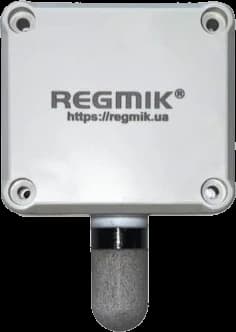
The wireless temperature and humidity sensor DVTs-304-LoRa is designed to measure air humidity and temperature. The DVTs-304-LoRa sensors transmit information via the LoRa protocol to a wireless LoRa interface converter. The scope of application of air humidity sensors is very wide and includes: Maintaining the microclimate within specified limits in production facilities equipped with humidity-sensitive electronic devices; Monitoring humidity levels in office premises and residential settings; In utilities – in boiler rooms and water treatment plants, helping to prevent condensation formation; Periodic monitoring helps avoid mold and mildew on building walls or in storage areas; Control of technological processes; Control of environmental parameters and more. The modulation method LoRa (Long Range) provides significantly greater communication range compared to other methods. Also, it has resistance to external interference and noise, allowing use in various industrial sectors. The DVTs-304-LoRa temperature and humidity sensors prevent moisture condensation. Measuring Element for Humidity Measurement in DVTs-304-LoRa Sensors The sensors may use measuring elements HIH4xxx (manufactured by Honeywell International, Inc., USA) or SHTxxx (Sensirion, Switzerland). The multilayer design of the HIH4xxx sensitive element provides excellent resistance to most application hazards, such as wetting, dust, dirt, oils, and common chemicals in the environment. Main characteristics of sensors based on the HIH4xxx series elements include: Encapsulated thermoset plastic housing; Almost linear output voltage dependent on relative humidity; Interchangeability with laser trimming; Low power consumption design; Improved accuracy; Fast response time; Stable characteristics with low drift; Chemical resistance. The DVTs-304-LoRa temperature and humidity sensors based on SHTxxx series elements feature the following distinctions: High reliability and long-term stability; Proven technology with more than 10 years of experience; Developed for mass production; Optimized for minimal cost; Low signal noise level. The converter operates stably within the recommended humidity and temperature measurement ranges. Prolonged exposure to conditions outside the normal range, especially humidity > 80%, may temporarily increase measurement error. Upon returning to the normal range, parameters will slowly revert to factory settings. Special caution should be taken when using the converter in high humidity conditions (> 98%) and near the dew point, as wetting the sensitive element may cause irreversible failure. It is recommended to install DVTs-304-LoRa sensors with a protective cover, sensor element facing downward, minimizing sensor damage in high humidity and near the dew point. The sensor should be mounted so that air freely circulates around it. When choosing a wall location, avoid drafts, direct sunlight, and other heat sources. Mounting is done directly on the wall. Metrological Characteristics of DVTs-304-LoRa Digital Sensors Parameter Name Types of Metrological Characteristics 1 2 Temperature Sensor Type of Sensitive Element thin-film, ceramic operating from 5 to 60 °C from 5 to 60 °C extended from -40 to 100 °C from -40 to 100 °C Basic Error for Subrange, °C, no more than operating ± 0.5 ± 0.4 extended ± 1.8 ± 1.5 Relative Humidity Sensor Type of Sensitive Element semiconductor Range, % operating from 20 to 80 from 20 to 80 extended from 0 to 100 from 0 to 100 Basic Error for Subrange, %, no more than operating 5 3 extended 7 5 Application Areas for DVTs-304-LoRa Temperature and Humidity Sensors: Territorially distributed and local control systems; Remote data collection, dispatch control, production management; Automation tasks associated with data transmission; Integration of multi-level information systems; Communication interface with measuring devices, terminals. Main Characteristics of DVTs-304-LoRa Temperature and Humidity Sensors: Signal transmission frequency range 866–870 MHz; Number of conversion channels – 1; Maximum data transmission distance – up to 3000 m (line of sight with 5dBi antenna), up to 400 m (with interference); Enclosure protection rating – IP40; Power supply – two batteries or 1.5V AA-type accumulators; Autonomous operation time – up to 3 years (depending on sensor polling period); Data transmission protection; Suitable for industrial and household applications. Advantages of LoRa converters: Great range and coverage; Low power consumption; Affordable equipment cost. The wireless temperature and humidity sensor DVTs-304-LoRa is housed in ABS plastic and designed for wall mounting.