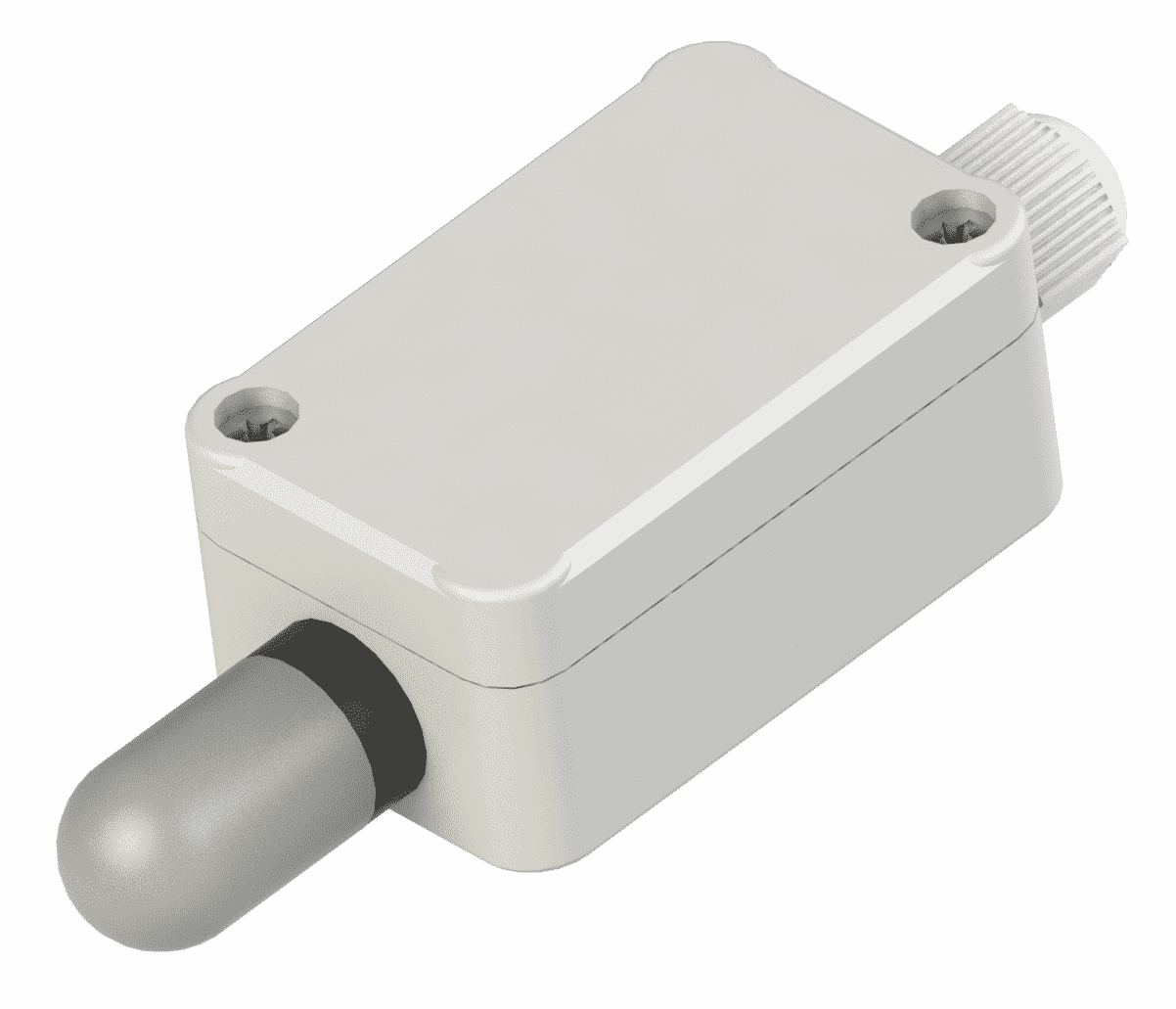
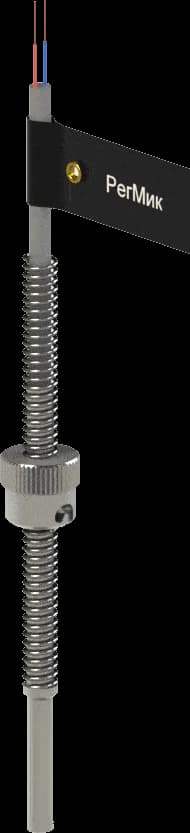
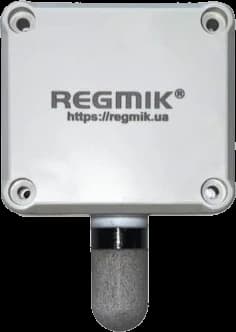
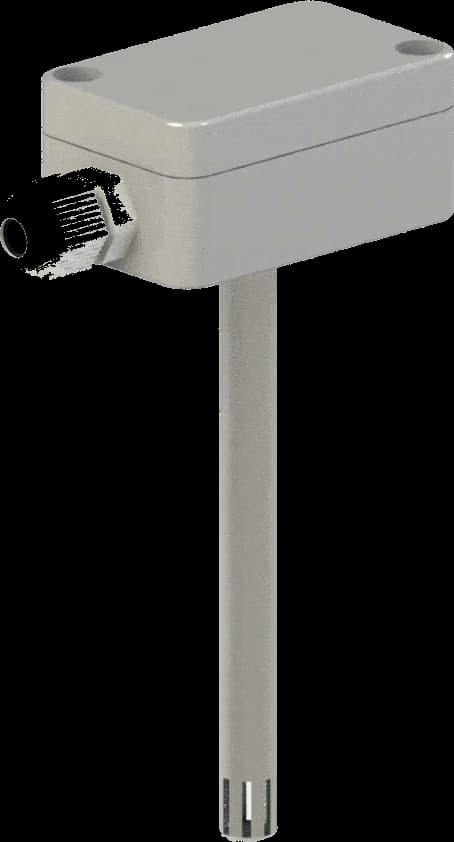
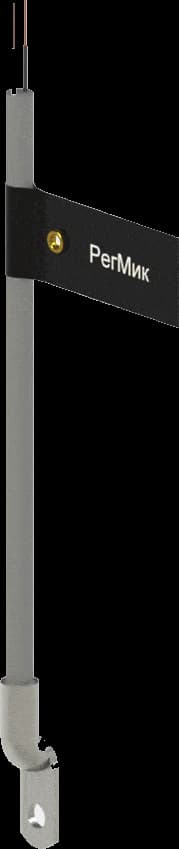
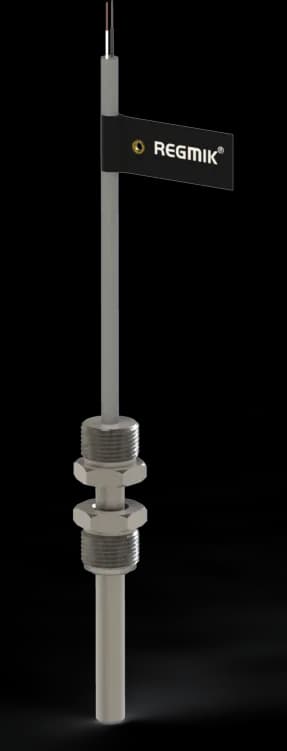
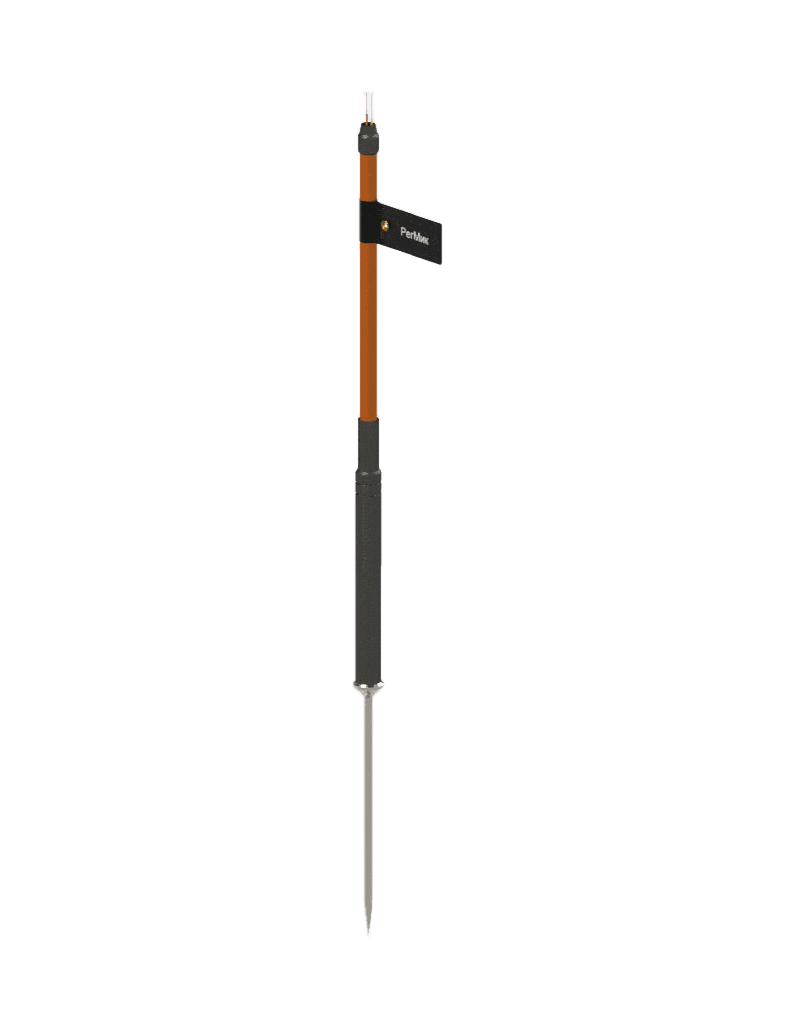
Temperature sensors 304 are devices of group 3, designed to measure the external air temperature in rooms and air ducts. Temperature is the most common measured parameter, and overheating is one of the most negative factors in equipment operation. Therefore, there are many ways and places to use temperature sensors. The basis of temperature sensor operation in automated control is the conversion of temperature into an electrical signal. This provides the advantages of electrical measurements: results can be easily transmitted over a network, and the transmission speed can be quite high. Quantities can be converted into each other and back. A digital code creates increased measurement accuracy, speed, and sensitivity. The operating principle of resistance temperature detectors is based on the change in electrical resistance of conductors and semiconductors depending on temperature. The material used for such sensors must have a high temperature coefficient of resistance, as linear a dependence of resistance on temperature as possible, good reproducibility of properties, and inertness to environmental influences. Platinum best meets these requirements; copper meets them to a somewhat lesser extent. Classification of temperature sensors 304 REGMIK by type of measuring (sensitive) element: resistance temperature detectors (thermometers) - TSM, TSP; semiconductor converters - TP. Main technical characteristics of temperature sensors 304: connection circuits of sensitive element - two-, three-, four-wire; by type of sensitive element they are divided into: resistance temperature detectors (RTD, thermoresistors, thermometers, temperature sensors) (50M, 100M, 50P, 100P, Pt100, Pt500, Pt1000, Pt2000, Pt10000); degree of protection against dust and water - IP54; design of resistance temperature detectors (temperature sensors 304) - non-disassemblable; insulation resistance - not less than 100 MΩ; accuracy classes - A, B, C (for RTD). The air temperature sensor TSP-304 is installed so that air freely circulates around it. When choosing a wall location, it is necessary to avoid drafts, direct sunlight, and other heat sources, as well as walls facing outside. It has small dimensions and improved thermal inertia characteristics. It does not require complex installation work when installed on site. Installation is performed directly on the wall. The temperature sensors comply with the technical conditions TU U26.5-32195027-010, valid until 2016.